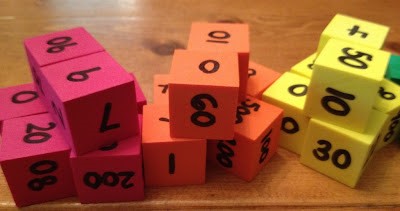
A Savremena elementary school opened its doors to the European Math and Move project. The teachers from the Serbian school devoted themselves to the project and learning mathematics through play and movement.
The students were presented with this different learning method, and they accepted this innovation with great interest and introduced it into their daily mathematics learning.
The method of movement through learning has brought many benefits for learning mathematics. Students approached the tasks in front of them with more enthusiasm. They had very interesting tasks through which they solved problem and text problems.
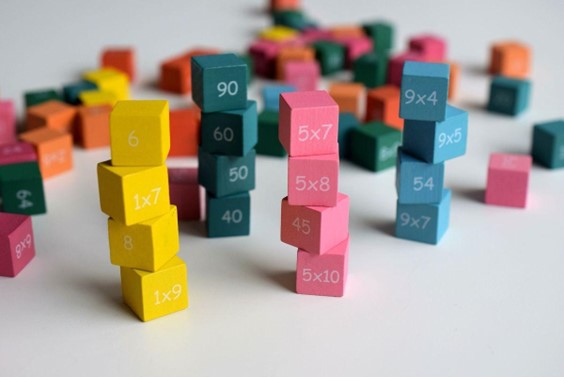
The goal of this approach is for students to develop a love for tasks that are seemingly problematic and require more thinking, but with the help of the project, it becomes easier to connect and therefore more interesting with physical activity. The students were presented with a plan and program that the teachers from the Serbian school made and adapted to the age group they represented.
The students could also learn how, with the help of movement, they can master lessons in geometry, measuring length, signalling, time measurement, fractions, basic mathematical operations…Through each lesson, it was necessary to include body movement in this kinesthetic activity.
The teachers from the Serbian school introduced lessons in which there were a lot of props, which caused an easier understanding of mathematics with the help of movement. With the help of a canvas on which an analog clock was drawn, the students showed the given time with the help of their bodies and thus moved their arms and legs. They also signaled the movement with the help of flags and thus explained to the others how to code the task. They used their hands and feet to measure the length of said objects.
All lessons were recorded with the participation of students and teachers and were transferred to the E-book. Physical activity supports stronger brain function and strengthens the muscles of the body, which in turn improves concentration and understanding of what has been mastered. It reduces stress and encourages student engagement in math tasks, where disinterest in math is significantly reduced.
The teachers from the Serbian school noticed that the students approach mathematics tasks with great interest through this innovation, and they also help each other and solve the problems of the tasks as a team.