
Mathematics is often presented and viewed as a demanding subject, but it can be exciting and fun when presented through play and movement. For 7- to 9-year-olds, combining math with play and activities can stimulate their curiosity, understanding, and facilitate the acquisition of math concepts.
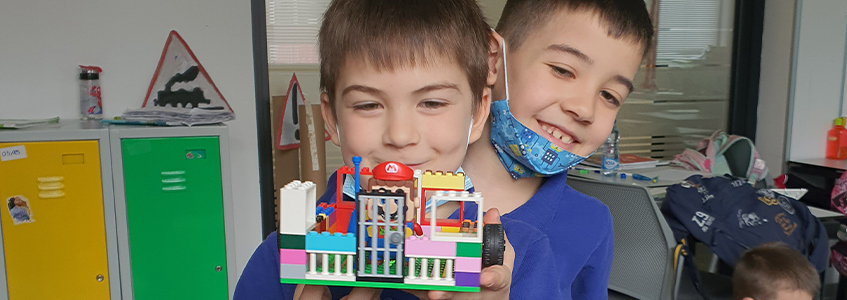
One way this can be achieved is through the use of toys and materials that encourage mathematical thinking. Stacking blocks, jigsaw puzzles, geometric shapes or even basic mathematical symbols can serve as learning tools. For example, playing with blocks allows children to explore basic math operations like addition and subtraction while working with physical objects.
Another great idea is to use physical activities that involve math. We can organize games like “Math Races” where children solve simple math problems to progress through the course. Also, games like “Relay Math Operations” can encourage cooperation among children as they solve math problems before passing the baton to the next team member. Movement can add dynamism to learning mathematics.
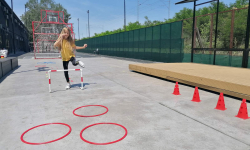
In addition, exercises such as jumping while counting, dancing while repeating numbers rhythmically, or even creating geometric shapes through physical movements can help children visualize and remember math concepts in a fun way.

It is important to highlight the advantages of this approach to learning. Integrating play and movement into math not only makes learning fun, but also encourages the development of motor skills, logical thinking, and emphasizes the importance of teamwork and problem solving. Children often understand abstract math concepts better when they are connected to concrete experiences or activities.
Mathematics through play and movement opens the door to creative learning and exploration. It gives the child the opportunity to feel comfortable while exploring the world of numbers and shapes in a way that matches their natural instinct for play and exploration.
In a world full of learning opportunities, integrating math through play and movement for 7- to 9-year-olds brings not only knowledge, but a joy of discovery that will fuel their love of math and learning in general.
This approach allows children to develop an interest in mathematics in a natural and stimulating way. The combination of play and movement creates a pleasant environment that encourages learning and exploration of mathematical concepts.
These approaches are not only useful for learning mathematics, but also for developing social skills. Cooperation in play or team activities encourages sharing, communication and team spirit among children.
Through play and movement, mathematics becomes more than a set of numbers and formulas; becomes an interactive experience that encourages curiosity and love for this science. By encouraging play and movement in the learning process, children not only develop mathematical skills but also build the foundation for a lifetime of enjoyment in discovering the world around them.
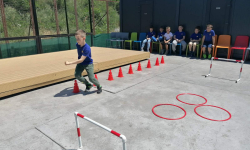
It is important to emphasize that the approach to learning mathematics through play and movement is not only fun, but also effective. The combination of activities allows children to develop a deeper understanding of mathematics through hands-on experience and application in real-world situations. In addition, such an approach can reduce anxiety associated with mathematics and encourage a positive attitude towards learning this science.
The right to photos is reserved by the “Savremena” Elementary School from Belgrade
Montessori, M. (2013). Absorbing mind, Belgrade: DN Center, MIBA books
Mrđa, M., Petojević, A. and Petrović, N. (2007): “Model of integrated teaching and physical education”, Pedagogija, no. 4, Belgrade