
Mathematics is often seen as a difficult and strictly theoretical subject, which causes anxiety for students and parents. But the truth is that we do not all need to “sit” at a desk to learn math by looking at a blackboard full of numbers and… unintelligible symbols. Erasmus+ Math & Move reminds us that moving away from traditional teaching methods can be not only OK, but also beneficial for children by enhancing students’ understanding and having fun.
Mathematics and Movement: A New Way of Learning
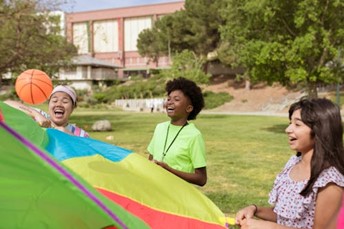
With the Math & Move program , mathematical thinking “escapes” from books and notebooks. Students learn math by incorporating physical movement into their daily instruction. Through fun activities, children can understand concepts such as numbers, measurements, geometric shapes and mathematical patterns while moving and interacting with their peers.
This program shows how moving away from traditional teaching can make learning more enjoyable and accessible. Activities that involve movement allow children to see maths in a different light and gain confidence as they feel they are understanding it through their bodies.
Benefits of Distancing
Many students have difficulties with mathematics, mainly because they associate it with concepts that seem distant from their everyday life. So when we move away from strict, traditional methods of teaching mathematics, we create space for creativity and exploration. Movement enhances assimilation of mathematical concepts and improves understanding through an experiential approach. Students are actively involved, exercising not only the mind but also the body, which is especially helpful for children who struggle with more conventional learning methods.
This approach encourages students to “distancing” from conventional methods and embrace learning through movement, making mathematics more accessible and enjoyable.
Educators and Parents Can Support This Change
Distance from traditional mathematics does not mean that we neglect it, but that we approach it in a different way. Educators and parents are allies in this new approach. Educators can incorporate movement and play activities into the lesson, while parents can encourage their children to engage in everyday activities that involve mathematical concepts without the pressure of ‘getting the answers right’. For example, games with balls, ropes or even simple gardening activities can be grounds for mathematical thinking.
Is Distancing the Key to a New Perspective?
One would dare to answer in the affirmative as it seems that reality needs a change of approach. Moving away from traditional math learning is a way to give children the opportunity to discover new aspects of math knowledge through movement and hands-on application. With the help of the Math & Move program , we can create an environment where learning becomes more accessible, fun and less stressful. Mathematics is no longer scary or boring, but part of a dynamic, interactive and experiential learning experience.
*** Inspired by the article of Champagne Zachary “Walking Away from a Mathematics Problem Is OK” (2021)